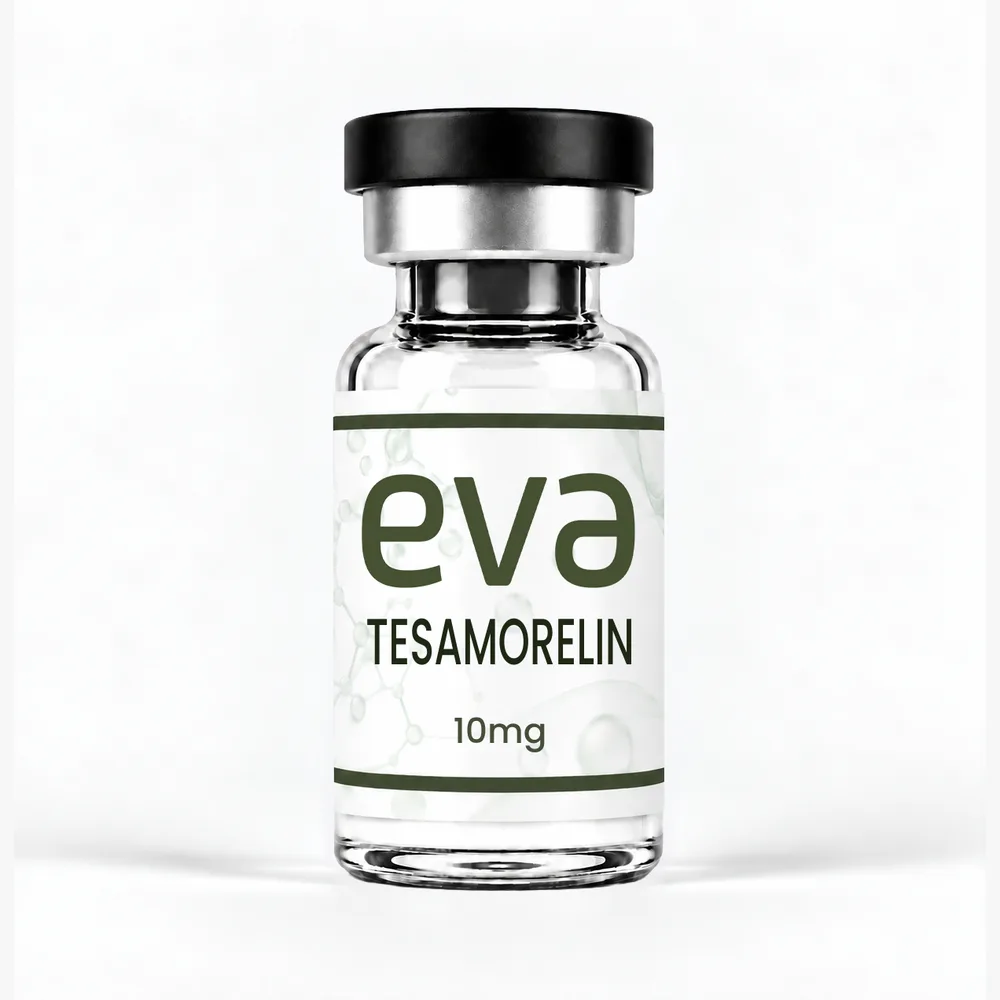
What it is
Tesamorelin is a stabilised synthetic analogue of growth-hormone-releasing hormone (GHRH 1-44) with a trans-3-hexenoic acid modification at the N-terminus that protects it from enzymatic degradation. It is one of the few GHRH analogues with a large clinical dataset.
Mechanism
It binds the GHRH receptor in the pituitary and stimulates pulsatile release of endogenous growth hormone, preserving the natural feedback loop via IGF-1 and somatostatin. Downstream effects are mediated by GH and IGF-1: lipolysis, particularly of visceral adipose tissue, and changes in body composition.
Research areas
- Visceral adipose tissue reduction
- Growth-hormone axis regulation
- Lipid metabolism and hepatic fat
- Cognitive function in ageing (pilot studies)
- Body-composition models
Safety and metabolism
Clinical studies report injection-site reactions and fluid-related effects as the most common findings; the GH response is physiological and pulsatile. Plasma half-life is short (≈ 30 min), while the GH response lasts longer.
Why this amount
10 mg covers a multi-week research series at typical study amounts.