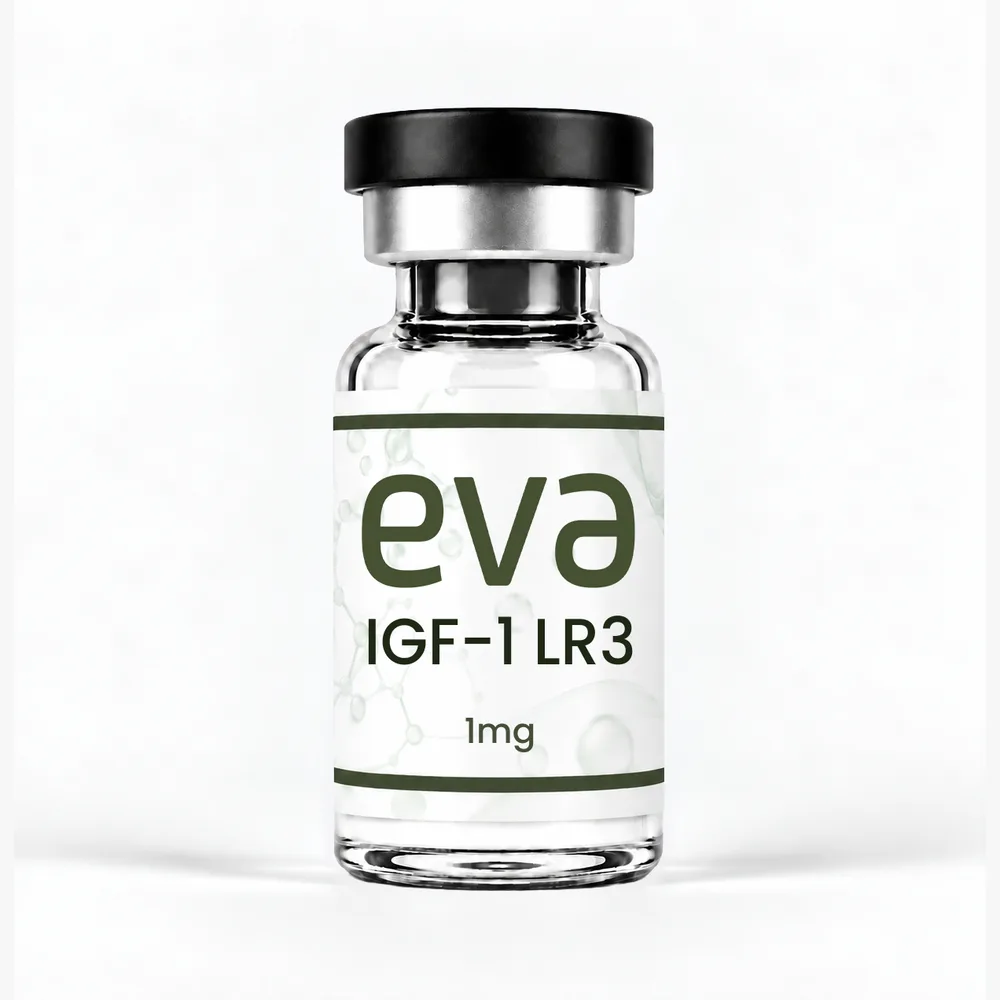

What it is
IGF-1 LR3 (Long R3 IGF-1) is an 83-amino-acid analogue of insulin-like growth factor 1 with an arginine substitution at position 3 and a 13-amino-acid N-terminal extension. These changes prevent binding to IGF-binding proteins, which greatly increases its biological availability compared with native IGF-1.
Mechanism
It activates the IGF-1 receptor, driving the PI3K/Akt/mTOR pathway: protein synthesis, cell proliferation and survival, and glucose uptake. Because it is not sequestered by IGFBPs, its activity in cell culture is roughly three times that of native IGF-1, which is why it is the standard IGF-1 variant in biotechnology and cell-culture media.
Research areas
- Cell-culture growth supplement
- Muscle hypertrophy and satellite-cell activation
- Anabolic signalling (mTOR)
- Glucose uptake and metabolism
- Tissue repair
Safety and metabolism
Potent and non-selective growth signal; hypoglycaemia is the principal concern in animal models. Half-life ≈ 20–30 h. Supplied at milligram scale because it is active at very low concentrations.
Why this amount
1 mg is the standard research amount for a full series; note the much smaller amount versus other peptides.