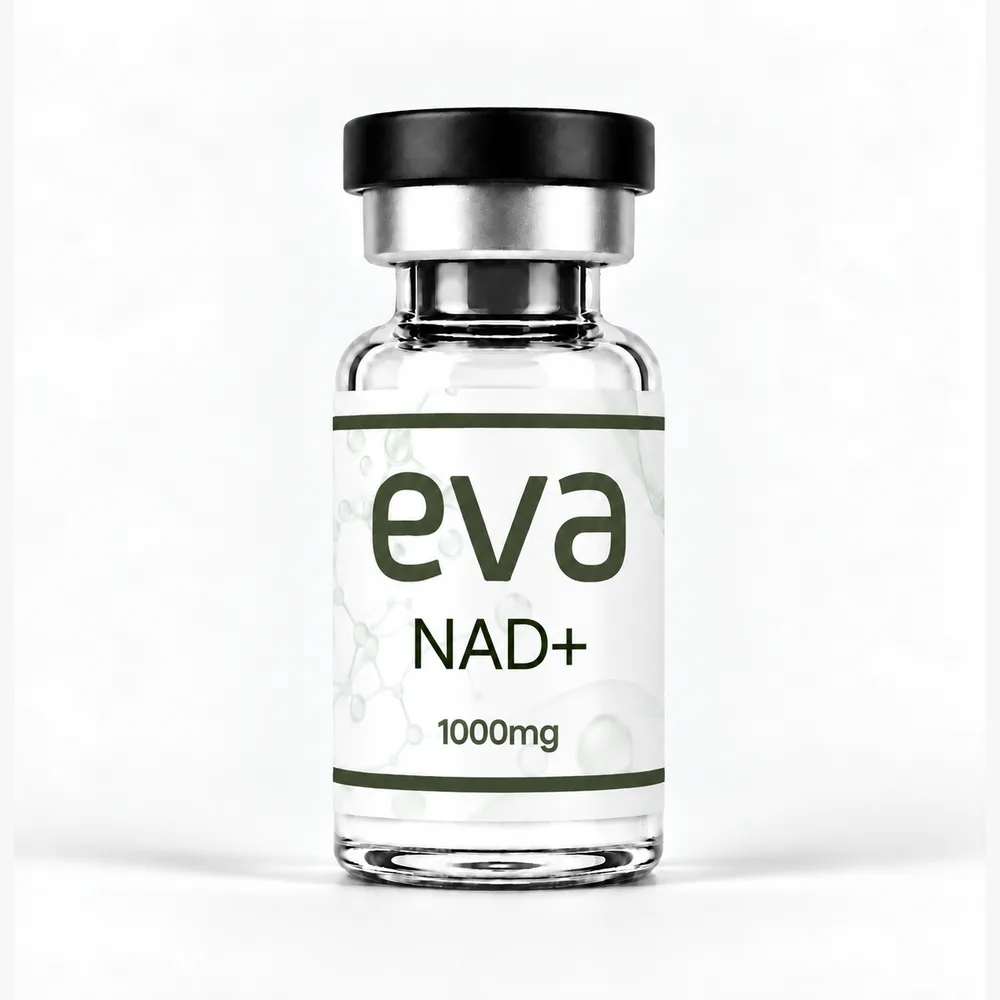

What it is
Nicotinamide adenine dinucleotide (NAD+) is a coenzyme present in every living cell. It cycles between oxidised (NAD+) and reduced (NADH) forms and is required for hundreds of metabolic reactions. Cellular NAD+ levels decline with age.
Mechanism
NAD+ is the essential co-substrate for sirtuins (SIRT1–7), PARP enzymes and CD38, linking energy metabolism to DNA repair, mitochondrial biogenesis and circadian regulation. Raising NAD+ availability is the rationale behind a large body of longevity and mitochondrial research.
Research areas
- Mitochondrial function and cellular energy
- DNA repair and sirtuin activation
- Ageing and senescence models
- Neurodegeneration models
- Metabolic and fatigue research
Safety and metabolism
NAD+ is an endogenous molecule with a very short plasma half-life; it is rapidly taken up or degraded to nicotinamide. Reconstituted solutions are sensitive to heat and light.
Why this amount
1000 mg reflects the milligram scale at which NAD+ is used in research, unlike peptides that act at microgram scale.