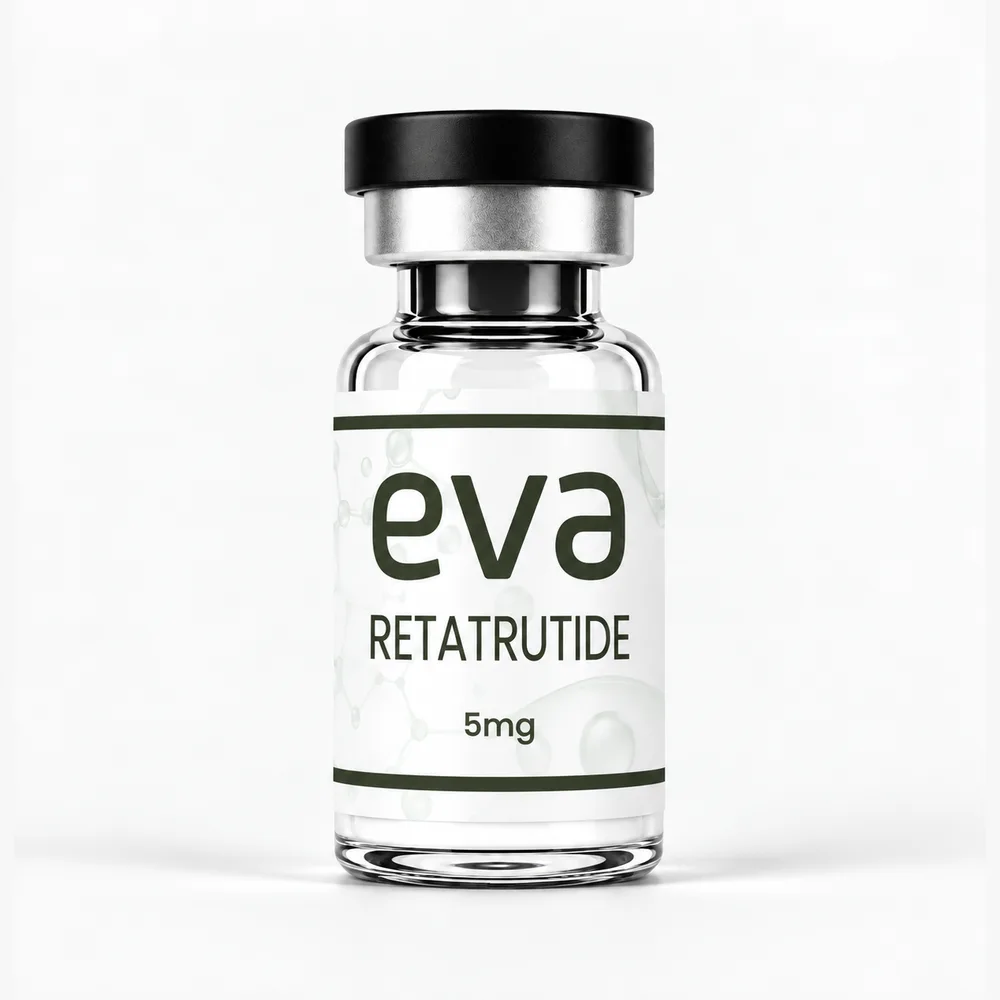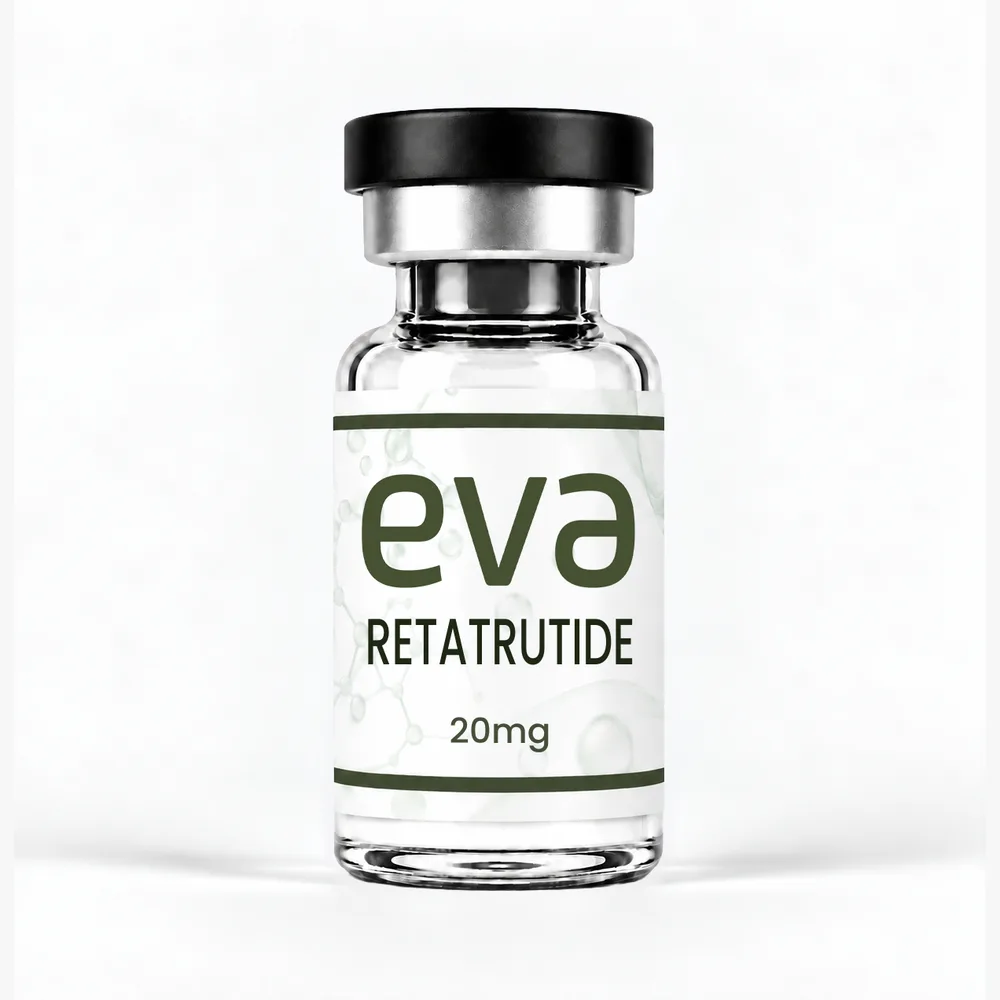
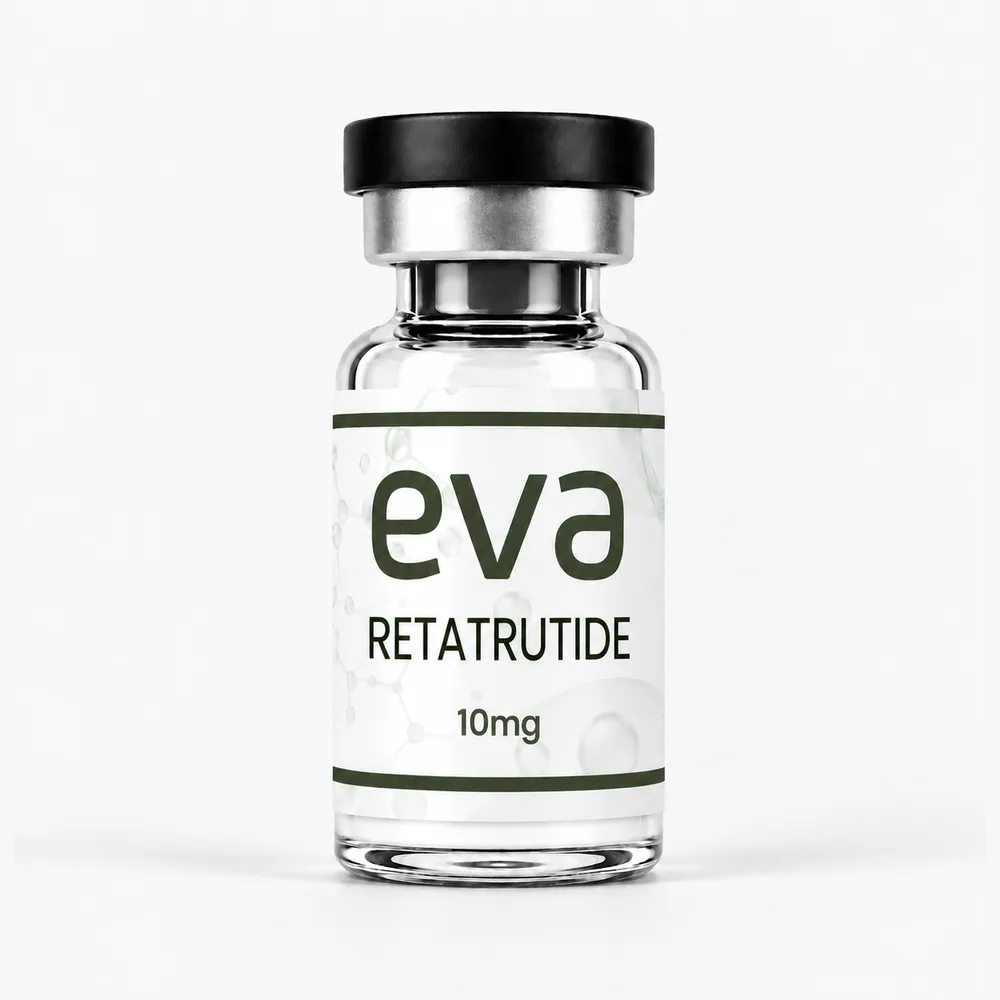

What it is
Retatrutide is a synthetic single-peptide agonist that acts on three receptors at once: GIP, GLP-1 and glucagon. It is one of the most studied compounds of the new generation of incretin-based metabolic peptides and is currently in late-stage clinical development.
Mechanism
GLP-1 and GIP receptor activity is associated with glucose-dependent insulin release and reduced appetite signalling; glucagon receptor activity adds an effect on hepatic energy expenditure and lipid metabolism. The triple-agonist design combines these pathways in a single molecule with a long half-life, allowing once-weekly administration in clinical studies.
Research areas
- Body-weight regulation and adiposity models
- Glucose homeostasis and insulin sensitivity
- Hepatic fat (MASLD / MASH) models
- Energy expenditure and lipid metabolism
- Cardiometabolic risk markers
Safety and metabolism
In published phase 2 trials the most frequent findings were gastrointestinal and dose-dependent, consistent with the incretin class. The molecule is fatty-acid acylated, which extends its plasma half-life to several days. Long-term data are still being collected.
Why this amount
10 mg is the standard research amount and covers a typical multi-week series. 5 mg suits titration studies; 20 mg covers longer series from a single reconstitution.